
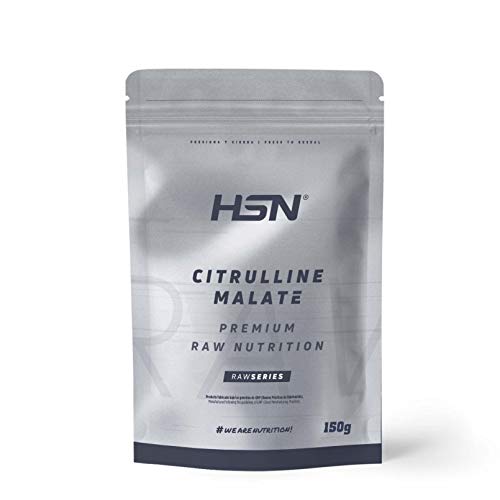
Citrulina Malato Powder 150g - 30 Tomas
HSN 
💊 5g · 30 tomas
What is it for?
Component
Aminoacido que aumenta la produccion de oxido nitrico, mejorando el flujo sanguineo, rendimiento deportivo y la ereccion. Mas efectivo que arginina oral.
💡 L-citrulina malato es la forma mas estudiada para rendimiento. La L-citrulina pura tambien es efectiva. Tomar 30-60 min pre-entreno.
⚠️ Generalmente segura. Puede potenciar efecto de antihipertensivos y medicamentos para disfuncion erectil. No combinar con nitratos.
Reference dose
L-citrulline 3-6g/day
3000-6000 mg
L-citrulline malate 6-8g pre-workout
3000-8000 mg
Product details
EspañaFeatures
💰 Cheaper alternatives


Other products from Citrulina

📚 Scientific evidence
Ensayo clínico doble ciego en hombres entrenados durante 6 semanas. La suplementación con L-citrulina (8g) mostró mejoras en rendimiento de fuerza, reducción del esfuerzo percibido y marcadores de fatiga, con perfil de seguridad favorable frente a citrulina malato.
Estudio en deportistas de equipo masculinos: 3 días de suplementación con citrulina malato mejoró el rendimiento en sprints repetidos de corta duración. Los autores concluyen que puede ser útil como ergogénico agudo en deportes de equipo con alta intensidad intermitente.
The broiler industry is pivotal in meeting the growing global demand for highly nutritious animal protein foods. Hence, there is a continuous interest in identifying novel, alternative, and even unconventional feed resources that could help sustainably support chicken meat production and quality. In this view, the microalga Spirulina (Arthrospira, formerly Spirulina, platensis), due to its unique chemical composition and some ecological advantages offered by its cultivation over traditional agriculture, has attracted great attention in the poultry sector for potential application in broiler diets, either as a functional supplement or a replacer of conventional protein sources such as soybean meal. The studies conducted so far seem to have confirmed many of the initial expectations regarding the advantages that may derive from dietary Spirulina supplementation, documenting its capacity to positively influence the intestinal and general health status of broiler chickens, leading to improved or preserved productive performance (under normal or challenging conditions, respectively), as well as to increased disease resistance and survivability. Furthermore, dietary Spirulina supplementation has been shown to induce positive changes in some important traits of broiler meat quality. However, at present, the inclusion of Spirulina in broiler diet, especially but not solely in relation to the use as an alternative protein source, presents several technical and economic limitations. To increase the overall awareness around the actual usefulness and practical usability of Spirulina as a novel natural component of the broiler diet, this review paper seeks to provide a comprehensive and integrated presentation of what is currently known about this topic, highlighting critical issues that are still pending and would require further research efforts.
Introdução: A Leishmania infantum é o agente etiológico causador da leishmaniose visceral, doença que afeta milhões de pessoas ao redor do mundo. Este estudo explora o potencial terapêutico da suplementação com L-Citrulina, um aminoácido não essencial, na modulação da resposta imune e atenuação da progressão dessa doença em modelos murinos. Métodos: Os animais foram distribuídos em dois grupos de acordo com o início da suplementação de L-citrulina: tratamento prévio (Grupo A) e tratamento sincrônico (Grupo B), cada um contendo 20 animais. Após 7 dias do início da suplementação no grupo A, 10 camundongos dos grupos A e B foram inoculados com 1x10⁶ promatigotas de L. infantum e os demais receberam solução salina. Após 7 dias de infecção, todos os animais foram analisados clinicamente. Além disso, estes tiveram o peso corporal analisado em três momentos: 7 dias antes da infecção, no dia da infecção e após 7 dias de infecção ao final, os valores foram tabelados e analisados estatisticamente. Resultados: Foi possível verificar que suplementação de L-Citrulina resultou em um maior percentual de ganho de peso corporal nos animais tanto infectados quanto não infectados nos períodos analisados. No grupo tratado sincronicamente com a infecção, os animais infectados apresentaram ganho de peso significativo quando comparado ao que receberam solução salina. Conclusão: A suplementação de L-Citrulina pode enquadrar-se como uma estratégia nutricional promissora durante tratamento da infecção por L. infantum, logo, torna-se interessante avaliar os efeitos do uso desse aminoácido em humanos e em outras doenças hipercatabolicas.
An increase in systemic inflammation (inflammaging) is one of the hallmarks of aging. Epigenetic (DNA methylation) clocks can quantify the degree of biological aging and this can be reversed by lifestyle and pharmacological intervention. We aimed to investigate whether a multi-component nutritional supplement could reduce systemic inflammation and epigenetic age in healthy older adults. We recruited 80 healthy older participants (mean age ± SD: 71.85 ± 6.23; males = 31, females = 49). Blood and saliva were obtained pre and post a 12-week course of a multi-component supplement, containing: Vitamin B3, Vitamin C, Vitamin D, Omega 3 fish oils, Resveratrol, Olive fruit phenols and Astaxanthin. Plasma GDF-15 and C-reactive protein (CRP) concentrations were quantified as markers of biological aging and inflammation respectively. DNA methylation was assessed in whole blood and saliva and used to derive epigenetic age using various clock algorithms. No difference between the epigenetic and chronological ages of participants was observed pre- and post-treatment by the blood-based Horvath or Hannum clocks, or the saliva-based InflammAge clock. However, in those with epigenetic age acceleration of ≥ 2 years at baseline, a significant reduction in epigenetic age (p = 0.015) and epigenetic age acceleration (p = 0.0058) was observed post-treatment using the saliva-based InflammAge clock. No differences were observed pre- and post-treatment in plasma GDF-15 and CRP, though participants with CRP indicative of an elevated cardiovascular disease risk (hsCRP ≥ 3µg/ml), had a reduction in CRP post-supplementation (p = 0.0195). Our data suggest a possible benefit of combined nutritional supplementation in individuals with an accelerated epigenetic age and inflammaging.
Want to know if this product is right for you?
Take the personalized testSuplr may receive a commission for purchases made through the links on this page. This does not affect the price you pay or our recommendations, which are based exclusively on scientific evidence.